
As forecast, it has indeed been a busy week.
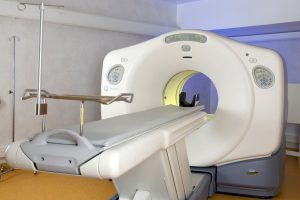
Monday’s PET scan was pretty easy. Firstly a radioactive marker dye was injected, then I had to wait an hour for it to spread throughout my body before going into the scanner which took about 40 minutes. The purpose was to highlight anywhere else the cancer might have spread.
The most difficult thing was to heed their advice not to be any closer than 2 metres to anybody for at least six hours, since I remained radioactive for that time!
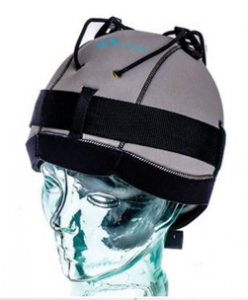
Tuesday’s Pre-Assessment involved a vast number of questions to answer. Then we were introduced to my dedicated Cancer Support Nurse and were shown around the St Martha’s Oncology Unit. I asked if I could see what a “cold cap” looked like (it will perhaps save some of my hair). Not nearly as scary as I had thought, it was actually similar to a jockey’s helmet, only colder!

On Wednesday afternoon I had an appointment at a local hairdressers to choose and be measured for a wig. They were surprisingly real-looking and after an at-times amusing session I finally chose one that looks very much like my own hair and style. They will keep all the information and if/when I need it they can order it quickly.
This afternoon the marker coil was inserted under local anaesthetic with ultrasound guidance and then we waited a short time to see the Consultant Clinical Oncologist.
I was reassured to learn that the PET scan indicated no spread of the cancer, although there was some “low-level activity” in my lymph nodes which indicates that it has spread that far (the lymphatic system is there to filter out harmful things, so in fact the nodes have done their job). The consultant said that as a matter of routine they would invariably remove one or more nodes at surgery time and that the proposed chemotherapy regimen would deal with it anyway.
The full biopsy results show that I have a HER2-positive cancer. Treatments that specifically target HER2 (such as Herceptin) are very effective; in fact they are so effective that the prognosis for HER2-positive breast cancer is actually quite good. Let’s hope so!
So, I am to have the following treatment before surgery:
- Four sessions at three-weekly intervals of ET: Epirubicin and Cyclophosphamide
- After another three weeks, twelve sessions at weekly intervals of Taxol
- One week into the twelve sessions I will also be given Trastuzumab (Herceptin) which is an antibody treatment using Monoclonal Antibodies (MABs). This three-weekly treatment will continue for a long time after the surgery, for a whole year in total.
It is very disappointing for me that the MAB treatment won’t finish until the middle of February 2020 but that is how it has to be, unfortunately, our lives really are on hold.